


Abbey Park Visit: Exploring Geography, Maths and Life Skills in Our Local Area
At Spark Vale Academy, we believe that learning is most powerful when pupils can connect classroom knowledge with real places, real experiences and the world around them.
Our recent visit to Abbey Park gave learners the opportunity to explore their local area in a practical and meaningful way. Pupils looked around the whole park, visited Pets Corner and explored the Abbey Church ruins. The visit linked strongly to Geography and Maths, while also supporting Life Skills, Personal Development, local history, Science, PSHE and preparation for adulthood.
For many pupils with SEND, a visit like this is about much more than going to the park. It helps pupils build confidence, practise independence, communicate safely, manage new environments and understand their place in the local community.
Geography in action: exploring our local area
The visit to Abbey Park was a valuable opportunity for pupils to experience Geography in a real-world setting.
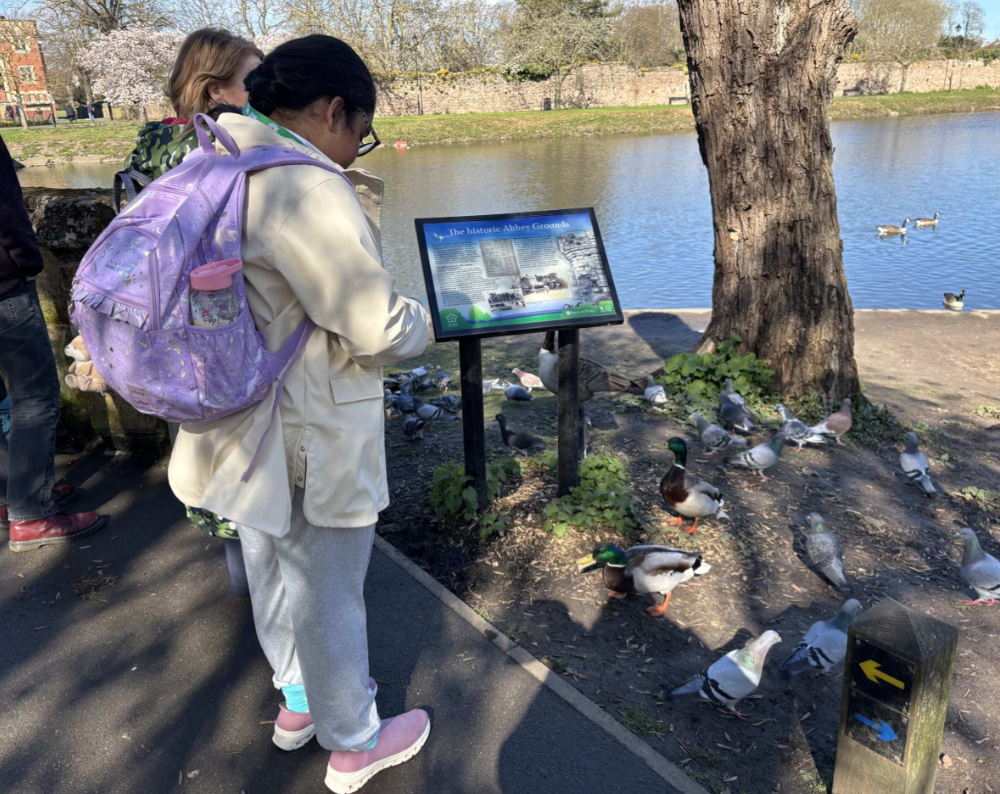
Rather than learning about place, movement, community and environment only in the classroom, pupils were able to explore a local place directly. They moved through different areas of the park, noticed landmarks, followed pathways, looked at signs, identified natural and human features and experienced how people use shared community spaces.
Abbey Park gave pupils opportunities to think about important geographical questions, such as:
- What can we see in our local area?
- How do people use parks?
- Where are the paths, signs and safe spaces?
- What natural features can we notice?
- What human features can we see?
- How do we move safely around a public space?
- How do local places help people relax, exercise, learn and spend time together?
The visit also linked to local area fieldwork. Pupils were able to observe the park environment, notice different spaces, identify key features and begin to understand how Abbey Park supports the wider community.
This is an important part of preparation for adulthood. Understanding local places, routes, landmarks, safe spaces and community facilities helps pupils become more confident when accessing the world beyond school.
Maths in the real world
The Abbey Park visit also created strong opportunities for pupils to apply Maths in a practical and purposeful way.
As pupils explored the park, they were able to use mathematical thinking in real-life contexts. This included counting, comparing, estimating, noticing shapes, thinking about distance, using positional language, considering time and understanding routes.
Learners were encouraged to think about questions such as:
- How far have we walked?
- Which direction do we need to go?
- How long does the visit take?
- How many animals can we see in the Pets Corner?
- What shapes can we notice in signs, buildings, paths or the Abbey Church ruins?
- Which route helps us safely move around the park?
- How many benches, trees, paths, signs or landmarks can we count?
- Which area of the park is bigger or smaller?
- What is near, far, next to, opposite or across from us?
This helped pupils see Maths as useful, practical and connected to everyday life. Instead of Maths being only something completed in a classroom or workbook, pupils experienced how number, time, distance, direction, shape, space and comparison help us understand and navigate the world.
For learners with SEND, practical Maths experiences can be especially powerful. They help pupils connect mathematical language to real objects, real places and real actions. Abbey Park provided a meaningful setting for pupils to practise problem-solving, decision-making and mathematical communication.
Maths also linked closely to independence. Understanding time, routes, signs, distance, direction and safe movement supports pupils as they develop confidence accessing local places and preparing for adulthood.
Life Skills: building confidence in the community
The Abbey Park visit formed part of our Life Skills curriculum, where pupils learn how to access the community safely and confidently.
Before, during and after the visit, pupils practised important skills such as preparing for a community visit, following adult guidance, staying with the group, walking safely, using public spaces respectfully, recognising shared spaces and communicating needs or preferences.
These are important steps towards independence. Many of our learners benefit from repeated, carefully supported opportunities to practise real-life skills in real environments. Visiting Abbey Park helped pupils understand how to behave in a public space, how to share community areas respectfully and how to manage different sensory experiences outside school.
At Spark Vale, Life Skills is not just taught in theory. Pupils are supported to rehearse, practise and apply independence skills in the places they may use as young adults.
Exploring Pets Corner
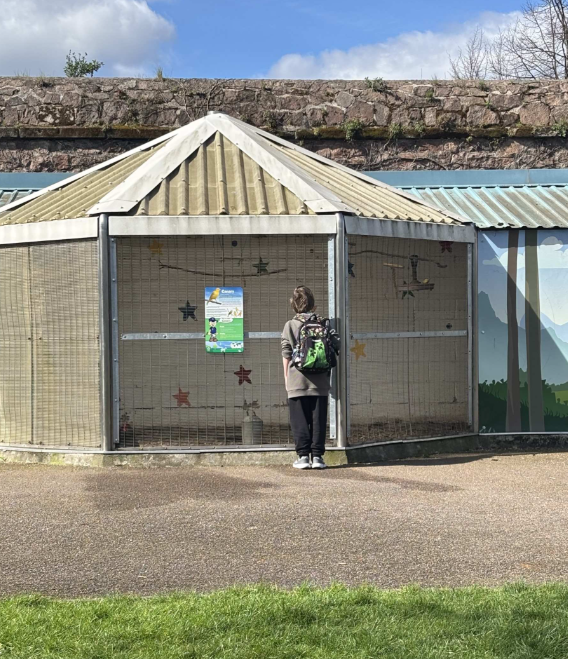
A highlight of the visit was exploring Pets Corner. Pupils were able to see animals, notice their behaviours and talk about what animals need to stay healthy and safe.
This linked naturally to Science, communication and observation. Pupils had opportunities to use descriptive vocabulary, ask questions, share what they noticed and make connections with living things, habitats and animal care.
For some learners, being near animals can also support curiosity, calmness, sensory engagement and emotional connection. For others, it provides a structured opportunity to practise boundaries, patience, safe behaviour and confidence in a new environment.
Pets Corner also supported Maths and Geography learning. Pupils could count animals, compare sizes, notice enclosures, think about where animals live and talk about how different spaces are used for different purposes.
Discovering local history through the Abbey Church ruins
The visit also included time looking at the Abbey Church ruins. This gave pupils an opportunity to connect with local history in a concrete and accessible way.
Rather than learning about history only through books or worksheets, pupils were able to see a historical site in their own local area. They could look at the ruins, notice the materials, ask questions and begin to understand that places change over time.
The Abbey Church ruins also supported Geography and Maths learning. Pupils could notice the shape of the ruins, compare old and new parts of the park, look at materials, identify landmarks and think about how historical places become part of the local environment.
For pupils with SEND, seeing and experiencing a historic place first-hand can make learning more meaningful. It helps turn abstract ideas such as “the past”, “change” and “local heritage” into something visible, real and memorable.
Personal Development in action
The Abbey Park visit was also a valuable Personal Development opportunity.
At Spark Vale Academy, Personal Development is developed through the wider curriculum, daily routines, relationships, enrichment, community access, pupil voice and real-world practice. A visit to a local park brings many of these areas together.
During the visit, pupils practised confidence, resilience, communication, safe choices, self-regulation, social interaction and independence. They experienced a public space, followed expectations, managed transitions, explored a new environment and reflected on what they had seen and done.
For some pupils, accessing a local community place with support is an important step. For others, the challenge may be walking around the wider park, coping with changes in noise or weather, being near members of the public, visiting Pets Corner or exploring an unfamiliar historical area.
Each of these moments supports personal growth.
The visit helped pupils build cultural capital and community confidence. They were able to learn more about a place close to school, understand how the local community uses shared spaces and develop a stronger sense of belonging in the wider world.
PSHE, safety & wellbeing
The visit also supported PSHE learning by helping pupils apply safety, wellbeing and social understanding in a real community context.
Pupils practised staying safe in a public place, recognising trusted adults, following instructions, respecting other people using the park and making safe choices. They also experienced how outdoor spaces can support health and wellbeing.
Parks can provide opportunities for movement, fresh air, calm, sensory regulation and connection with nature. For pupils who may experience anxiety, sensory overload or low confidence, supported access to outdoor spaces can help them build positive associations with the community.
The visit helped pupils understand that local places can support wellbeing, independence and belonging.
How families can extend this learning at home
Families can help pupils build on this experience by talking about local places they visit together and noticing the Maths and Geography that appear in everyday life.
This could include talking about the route to a local park, shop or family place, looking for signs, paths, crossings, bus stops, landmarks and safe spaces, or counting animals, trees, benches, steps, cars or signs during a walk.
Families could also look for shapes and patterns in buildings, paths, gates, windows or playground equipment, use words such as near, far, next to, opposite, behind, in front, left and right, or talk about how long a journey takes and what time they leave and return.
If visiting an old building, church, park or local landmark, families could ask questions such as, “What do you think this place was used for?” or “How do you think this place has changed over time?”
Encouraging pupils to share what they remember from Abbey Park, Pets Corner or the Abbey Church ruins can also help strengthen communication, memory and confidence.
Even a short walk can become a valuable learning opportunity. These small conversations help pupils connect school learning with home, build confidence in the community and practise the everyday skills that support independence.